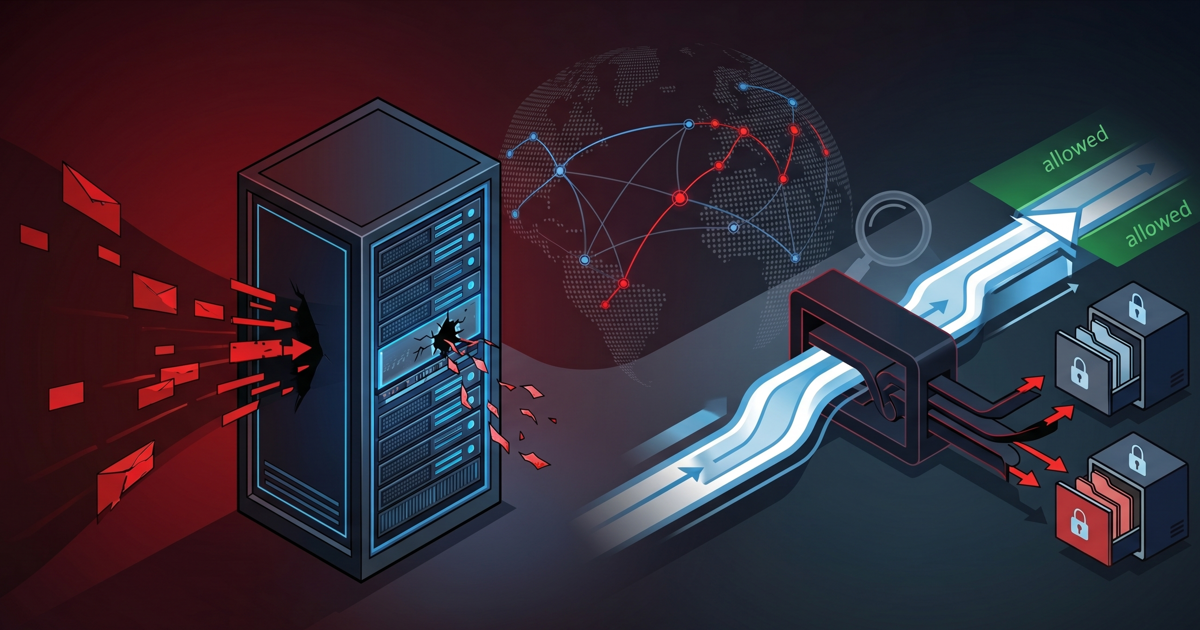
Compromising Your Most Trusted Internal System
To every CTO, CISO, and Developer: You have one of your most trusted, internal-facing systems being actively abused. We are not talking about a theoretical risk; this is a Remote Code Execution (RCE) vulnerability in Microsoft’s Windows Server Update Services (WSUS) that is a terrifying new reality for network security.
Your patch management server—the one intended to be your organization’s single source of truth for security updates—could be a wide-open door. This door is labeled CVE-2025-59287, and it allows an unauthenticated attacker to execute code remotely on your WSUS server.
CISA—the Cybersecurity and Infrastructure Security Agency—has already added this to their Known Exploited Vulnerabilities Catalog. If you are running WSUS, you must move like your hair is on fire.
Technical Threat Analysis: The Deserialization Flaw
This vulnerability is a maximum-severity, textbook technical flaw that enables an attacker to gain full control of the server before any security checks are performed.
Insight 1: The Technical Exploit – A Textbook Deserialization Flaw
The core of the issue is a deserialization vulnerability (CWE-502), primarily targeted through the GetCookie() endpoint on your WSUS server.
- The Flaw: The WSUS server’s code, specifically in the Authorization.EncryptionHelper.DecryptData() method, receives and processes an encrypted payload, the AuthorizationCookie, and attempts to decrypt and deserialize its contents using the insecure .NET BinaryFormatter.
- The Mechanism: Analysis from Palo Alto’s Unit 42 and others confirms that this improper handling of data allows an attacker to craft a malicious serialized object (gadget chain), which, upon being deserialized, tricks the server into executing arbitrary code remotely.
- The Lesson for Developers: As security professionals, the fundamental technical lesson here is simple: never trust incoming data, particularly when it involves object reconstruction (deserialization of untrusted input), or you risk handing over the keys to your entire system.
Insight 2: The End Game – Lateral Movement and Domain Takeover
The compromise of the WSUS server is not the ultimate goal; it is a high-privilege staging ground for a full domain takeover.
- Initial Compromise: Once the attacker successfully executes their payload, they gain SYSTEM-level control of the WSUS server.
- Reconnaissance & Data Harvesting: Sophos’s Counter Threat Unit and Huntress have documented the attacker’s process tree: they drop a malicious file and use decoded PowerShell commands to perform a system sweep. This command is specifically designed to gather vital domain user and network information—the exact intelligence needed for lateral movement across your internal network. Examples include commands like whoami, net user /domain, and ipconfig /all.
- Post-Exploitation: Darktrace has observed post-exploitation activities including the deployment of secondary command and control tools, such as Velociraptor, illustrating a methodical approach to network-wide exploitation and data exfiltration.
The attacker’s approach is often “low-and-slow,” turning the trusted WSUS server into a pivot point to compromise the rest of the domain.
Mitigation and Urgent Action Required
The severity of this active exploitation forced Microsoft to issue an out-of-band security update, a rare action that signals a maximum-severity, stop-everything emergency.
Immediate Action: Patching is Non-Negotiable
If you haven’t patched yet, your first, non-negotiable step is to apply the security update. Failing to act on this specific RCE is the definition of negligence.
- Official Patch Link (MSRC): The official Microsoft Security Response Center (MSRC) update guide provides the necessary patches for all affected Windows Server versions (2012, 2012 R2, 2016, 2019, 2022, and 2025):
Key Interim Mitigation Steps
If immediate patching is not technically feasible, implement the following steps right now as a temporary measure:
- Network Isolation: Follow guidance from security researchers and isolate your WSUS server from public or non-essential internal access. Block inbound traffic to default WSUS ports (TCP 8530 and 8531) at the host-level firewall.
- Disable WSUS Role: If possible, disable the WSUS Server Role on the server entirely (though this will stop updates to clients).
- Threat Hunting: Assume compromise and actively hunt for Indicators of Compromise (IoCs), looking for the documented post-exploitation artifacts like unexpected cmd.exe or powershell.exe child processes spawned from wsusservice.exe or w3wp.exe, and base64-encoded PowerShell commands.
The vulnerability exposed by CVE-2025-59287 is more than just a server falling over; it’s a direct threat to your entire domain, utilizing a trusted patch management system as its launchpad. Patch immediately, re-evaluate your architecture’s exposure, and make sure your developers are building secure code from the start.
Is your team scrambling to address this critical threat, or do you need expert guidance on hardening your infrastructure and developer security lifecycle?
We can help! Schedule a consultation with us today at.