Your File Archiver is the Silent Killer
How many times a day do you open a file using WinRAR? You likely trust that simple action. You click a zipped archive, extract the documents, and continue your work. However, that innocent application—the one sitting on your computer for two decades—is now a primary attack vector.
A single mouse click allows sophisticated hackers to install persistent Trojans directly into your system’s Startup folder. WinRAR is one of the most widely used utilities on the planet. It contains a high-severity Path Traversal vulnerability tracked as CVE-2025-6218. This is not a theoretical risk; nation-state attackers and advanced threat groups currently exploit this flaw to walk right into secure organizations.
Technical Threat Analysis: The Extraction Trap
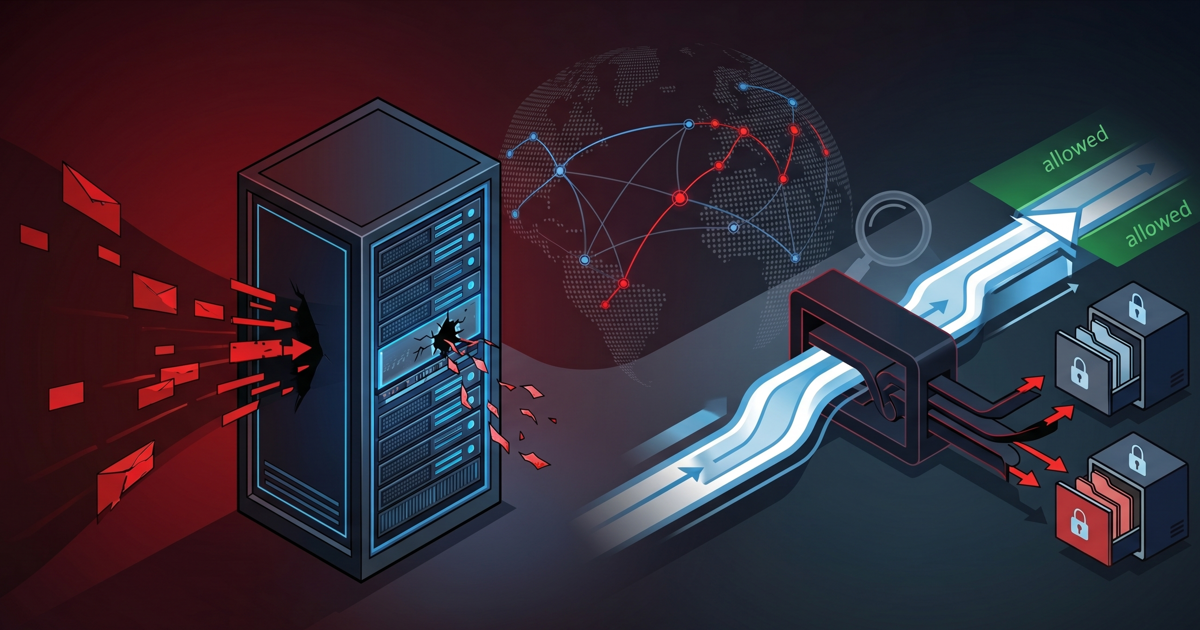
Think of a WinRAR archive as a secure box. When you extract files, they should remain inside that box. This vulnerability, a CWE-22 error, exists because WinRAR fails to properly check file names inside the archive.
The Directory Traversal Technique
Attackers build malicious archives that force WinRAR to use a directory traversal technique. By using file paths that point outside the intended extraction folder—using “dot-dot-slash” sequences to jump up the folder tree—the archive drops a payload anywhere on your drive. If the user running WinRAR has permission to write to a folder, the exploit can reach it.
Persistence and Remote Code Execution (RCE)
Attackers typically drop these malicious files into sensitive system locations. Common targets include the Windows Startup folder or Microsoft Word’s global template path (Normal.dotm).
When the archive drops a file here, your system executes the malicious code automatically the next time you log in or open Word. This provides the attacker with Remote Code Execution (RCE) and permanent persistence on your machine.
Nation-State Actors are Already Here
When a vulnerability becomes this easy to weaponize, sophisticated hacking groups jump on it immediately. Multiple Advanced Persistent Threat (APT) actors currently use this zero-day for espionage and data theft.
- APT-C-08 (Bitter): This group deploys a C# trojan specifically for keylogging and stealing credentials from South Asian governments.
- Gamaredon: This Russian group uses this exact flaw in spear-phishing campaigns to target Ukrainian military and governmental entities.
- The Dark Web: An actor named “zeroplayer” recently sold the exploit on the dark web, allowing other criminals to weaponize it.
The U.S. Cybersecurity and Infrastructure Security Agency (CISA) added CVE-2025-6218 to its Known Exploited Vulnerabilities Catalog. CISA ordered federal agencies to patch this flaw immediately, confirming the widespread nature of the threat.
Update WinRAR Manually
The most important security control is the simplest: Update your software. WinRAR does not automatically update itself. If you run WinRAR 7.11 or earlier, you are vulnerable. You must manually download and install the latest version.
- The Fix: Version 7.12 patched CVE-2025-6218.
- Ongoing Risks: Another similar path traversal flaw, CVE-2025-8088, recently emerged.
- Current Recommendation: Install version 7.13 beta 1 (or the latest stable release) to handle both critical flaws.
For developers, this serves as a harsh reminder: always sanitize your input. Treat every external file path or string as hostile. Never trust a name inside a compressed archive.
Final Thoughts
CVE-2025-6218 proves that even foundational tools can become dangerous weapons. Hackers move from a bug report to state-sponsored conflict in record time. Update your systems now and ensure your organization treats file extraction as a high-risk activity.
Are you worried about hidden flaws lurking in your custom software or third-party utilities?
We specialize in penetration testing and identifying these risks before the attackers do. Schedule a consultation with us today at StartupHakkSecurity.com.
Short on time? Watch on YouTube!