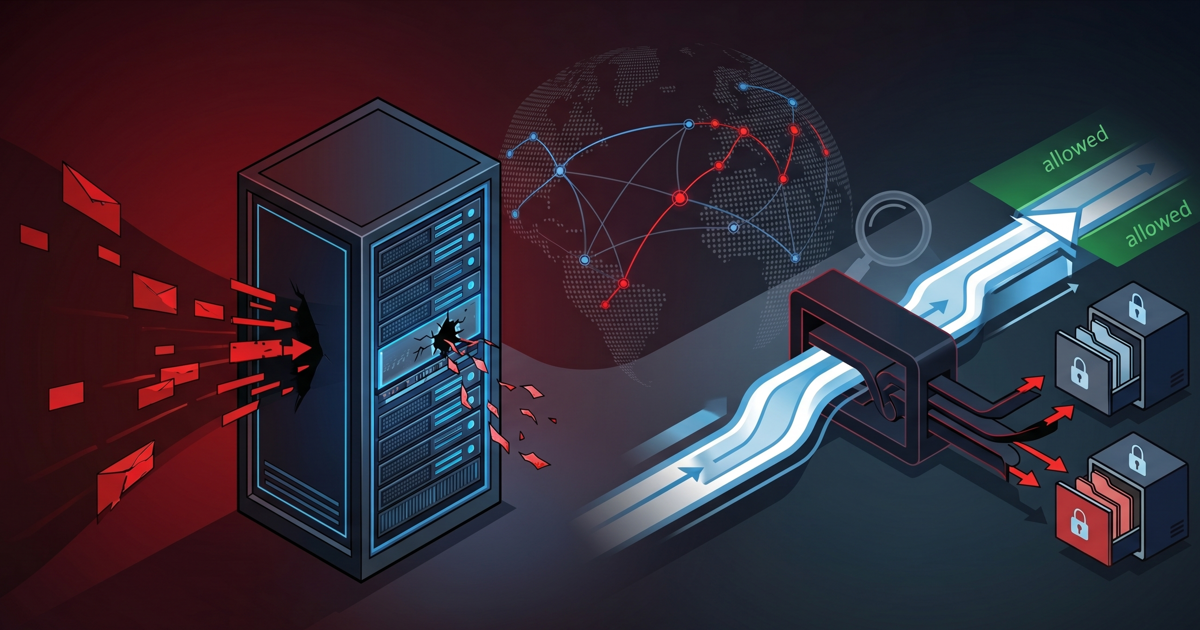
Your AI Infrastructure is the New Attack Surface
You are likely standing on a digital landmine that you laid yourself. While most organizations obsess over “prompt injection” or AI hallucinations, savvy attackers target the unsecured infrastructure and endpoints that connect your Large Language Models (LLMs) to your internal data.
Recent reports from The Hacker News confirm a massive shift in the threat landscape. The danger moved from the model’s “brain” to the actual pipes. If you plugged an AI tool into your company database without auditing who holds the keys, you essentially opened a direct straw for hackers to siphon your most sensitive secrets.
Technical Threat Analysis: Trusting the Wrong Pipes
Modern AI risks involve more than just bad outputs. Each new endpoint expands your attack surface, and hackers now use your own AI as a force multiplier.
Insight 1: The New Attack Surface – Infrastructure Over Intelligence
The primary headache today stems from the software serving the AI. Developers frequently spin up new services to connect LLMs to internal tools but forget to lock the doorway during the rush to deploy.
- The Trust Trap: Organizations often grant AI endpoints “implicit trust.” Once a hacker compromises the communication channel, they move laterally through your cloud services and databases with ease.
- Shadow AI: Developers often set up “Shadow AI” for testing and leave the API wide open without a password. These undocumented endpoints sit on the public web, broadcasting internal secrets to anyone with a basic script.
- Automated Exfiltration: Models with “tool-calling” enabled act as a force multiplier. A thief uses your own AI to find and export data at a speed no human could ever match.
Insight 2: The Non-Human Identity (NHI) Crisis
We now face a nightmare regarding “Non-Human Identities.” These service accounts and API tokens allow applications to communicate without human intervention, but they often carry excessive, permanent permissions.
- The Ollama Problem: Recent scans discovered over 175,000 Ollama AI servers exposed on the public internet. Many of these servers allow attackers to execute deep system code remotely.
- The Gemini Leak: Even major players face these risks. Thousands of Google Cloud API keys recently gave hackers full access to sensitive Gemini AI endpoints due to simple configuration overlaps.
- Static Credentials: These identities often use “static” credentials that never change. This makes them perfect raw material for a massive breach the moment an endpoint leaks.
Mitigation: Hardening Your AI Strategy
The landscape changes every week. Constant penetration testing and infrastructure audits are no longer optional; they are the only way to survive.
Actionable Steps for Security
- Kill “Zombie” Tokens: Data from Astra Security shows that nearly all modern API attacks involve stolen or “zombie” tokens. Implement strict, automated rotation for every key your AI uses.
- Apply “Least Privilege”: Treat your AI like a disgruntled intern. Give it access only to the specific data it needs for a task. Stop granting “Admin” rights to a simple summarization bot.
- Monitor Agentic AI: As we move toward “Agentic AI” where bots talk to other bots, the attack surface becomes volatile. Traditional security tools often fail to track these real-time AI-to-AI communications.
Final Thoughts
Exposed endpoints turn your most innovative tools into your biggest liabilities. If you are building AI tools, stop hardcoding keys and start using secrets managers immediately. After 25 years in development, I can tell you: if a key sits in the code, it already belongs to a hacker.
Does your team need an expert audit of your AI infrastructure, or are you worried about hidden “Shadow AI” in your organization?
We can help! Reach out to us for specialized security and pen-testing needs at StartupHakkSecurity.com.