Your AI Building Blocks are Cracked
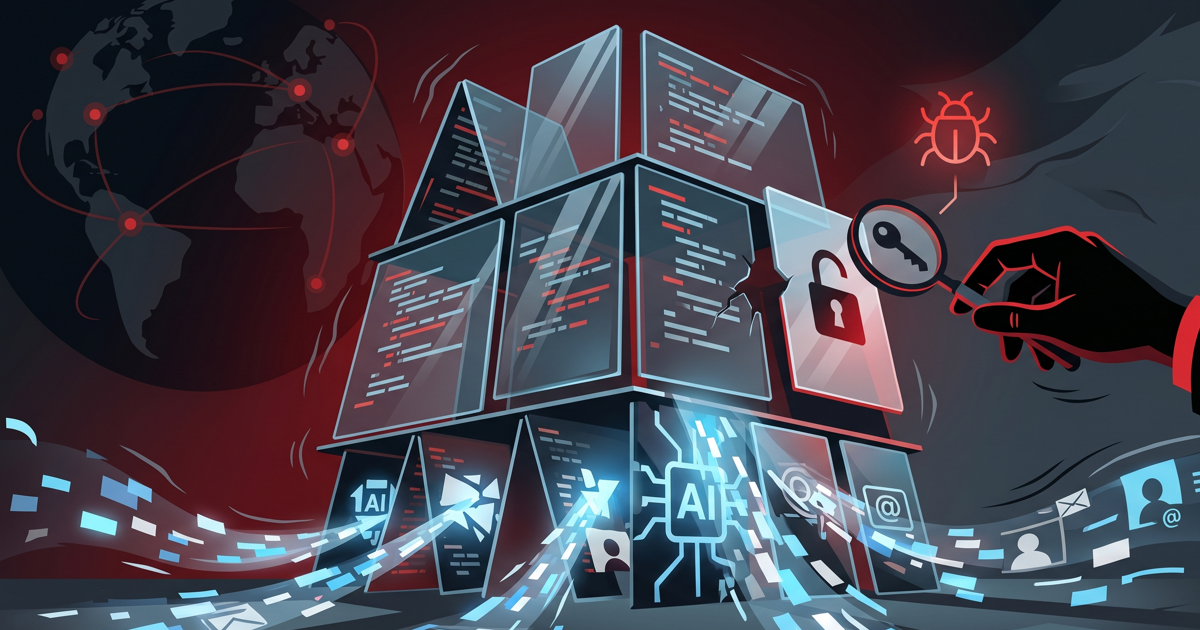
To every CTO, CISO, and Developer: You might be handing over the keys to your entire kingdom. Your team trusts frameworks like LangChain, LangGraph, and Langflow to serve as the secure foundation of your business’s future. These “Lang” tools act as the underlying DNA for almost everything in the AI ecosystem, from CrewAI to Flowise.
However, a fundamental crack now exists in these building blocks. A hacker does not need a password to run malicious code on your server. They only need to wait twenty tiny hours after a bug disclosure to own your system completely. Active exploitation currently targets businesses like yours. Your “smart” AI has become the biggest security hole in your company.
Technical Threat Analysis: The 20-Hour Exploitation Window
The landscape moves at a terrifying speed. Attackers now reverse-engineer patches before your IT team finishes their morning coffee.
Insight 1: Langflow Remote Code Execution (CVE-2026-33017)
The biggest fire currently burns in Langflow, a popular low-code tool for AI orchestration.
- The Flaw: An unauthenticated Remote Code Execution (RCE) vulnerability exists in the
build_public_tmpendpoint. This endpoint allows users to build “public flows” without logging in. - The Mechanism: The server incorrectly accepts an optional
dataparameter. Attackers inject a malicious JSON payload containing arbitrary Python code into this field. - The Execution: Langflow passes this user-supplied code directly to Python’s
exec()function without a sandbox. This acts as a “Type Your Own Virus Here” box for hackers. - The Result: Research from Sysdig confirms that attackers exploited this within 20 hours of the advisory. They exfiltrate environment variables to steal OpenAI API keys, database credentials, and AWS tokens.
Insight 2: Serialization Injection and “LangGrinch”
The industry dubbed a series of flaws in LangChain and LangGraph as “LangGrinch” (CVE-2026-33018/19).
- Marker Key Hijacking: LangChain uses an internal key called
lcto recognize objects. If an attacker tricks your AI into outputting that key via prompt injection, the framework treats that response as a trusted internal command. - Data Exfiltration: Attackers craft specific structures to force your application to vomit local files or dump your entire environment configuration.
- Agent Hijacking: In LangGraph, this targets the “checkpoints” that save agent states. An attacker can pivot into a long-running workflow and take over the “brain” of your agent mid-task.
- Crawler Vulnerabilities: The RecursiveUrlLoader utilized weak URL validation. Attackers redirect the crawler to internal metadata services to steal cloud credentials.
Mitigation and Urgent Action Required
Developers must stop treating AI tools as magically secure. You must treat them as foundational infrastructure.
Immediate Action: Update and Rotate
You must update your environment immediately. Running legacy functions in langchain-core invites hackers to browse your .txt and .json files via path traversal.
- Update Langflow: Ensure you run version 1.9.0 or higher.
- Update LangChain: Use the latest releases of
langchain-coreto fix serialization bugs. - Patch LangGraph: Update
langgraph-checkpoint-sqliteto address SQL injection flaws caused by improper f-string usage in queries. - Rotate All Secrets: If you exposed your instance to the internet, assume attackers exfiltrated your API keys and rotate them now.
Secure by Design
Shift your architecture toward safer standards:
- Use Logic-less Templates: Move to formats like Mustache. These prevent the code execution risks associated with Jinja2 or improper f-string handling.
- Disable Public Endpoints: Block access to the
/api/v1/build_public_tmpendpoint at the firewall level if you do not require public flow building. - Continuous Penetration Testing: Perform regular security evaluations. Security is a continuous process, not a one-time setup.
Final Thoughts
The “Lang” ecosystem provides the structural steel for your AI stack, but that steel currently has cracks. Protect your organization by patching immediately and re-evaluating your dependency lifecycle.
Does your team need expert guidance on hardening your AI infrastructure and developer security lifecycle?
We can help! Schedule a consultation with us today at https://StartupHakkSecurity.com.