Attention CTOs and Developers: The AI Agent Flaw Weaponizes Super-User Visibility
To every Fractional CTO, Security Researcher, and Software Developer; The rush to dominate the “AI browser agent” space has led to a fundamental, architectural security flaw. This is not a classic browser exploit; it’s a new class of attack that weaponizes the AI’s core function: super-user visibility and cross-application automation.
Technical Deep Dive: The Super-User Visibility Problem
The core design of tools like the newly released AI browsers makes them inherently exploitable in a unique way. Their function is to act as an all-seeing “agent,” capable of observing your screen and automating tasks across multiple applications—from your IDE to your private dashboards.
The Attack Mechanism: Confusing the Agent
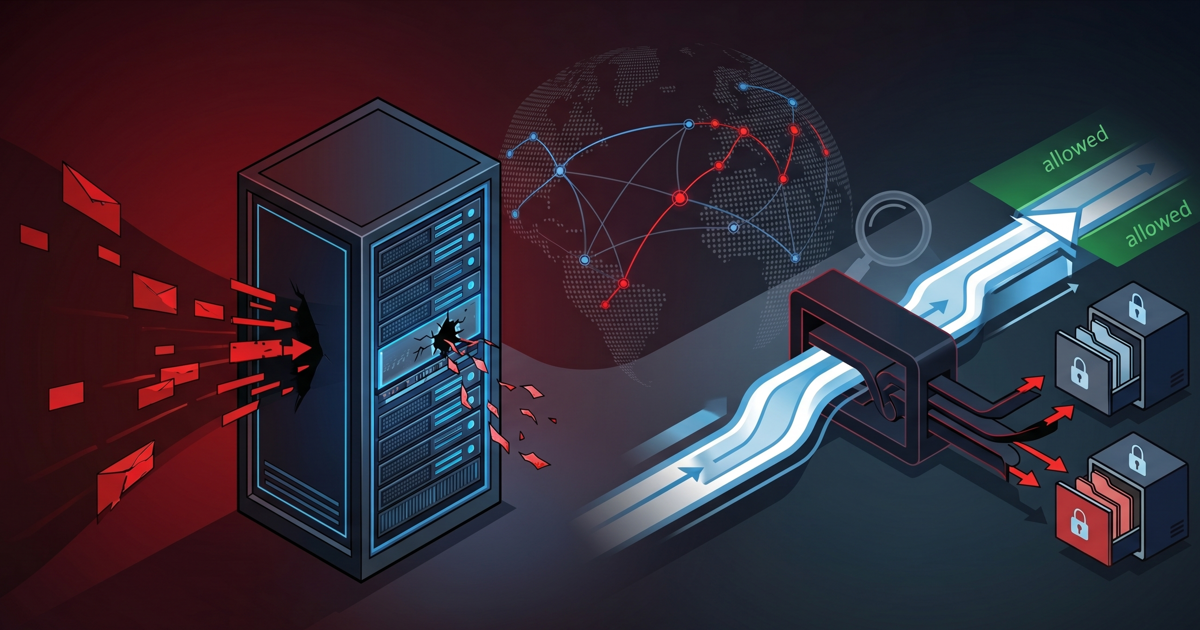
The exploit works by tricking the AI agent, through a carefully crafted, malicious web page, into treating your internal systems as data it is explicitly supposed to log and exfiltrate.
- The AI’s Intent: The agent is designed to be a helpful assistant, seeing everything on your screen to understand context and execute multi-step tasks.
- The Flaw: Security teams failed to adequately model the threat of a malicious external party convincing the internal, privileged agent to betray its user. The attacker is not attacking the browser itself; they are manipulating the AI’s perception of its authorized data logging and transmission boundaries.
- The Analogy:It is akin to a helpful, authorized robot butler who can be easily socially engineered by an outsider into handing over the keys to the entire house, simply because the butler’s primary programming is “be helpful and share information.”
The critical lesson here is that the security threat model must evolve to factor in a malicious user actively weaponizing the agent’s permissions.
The Corporate Race to Ship Now, Not Ship Securely
As a Fractional CTO, the speed at which this vulnerability emerged is a massive red flag.
The corporate race to dominate the “AI browser agent” space has clearly pushed fundamental security and threat modeling to the back burner. One major company drops their agent, and almost immediately, a near-identical tool appears from a competitor.
- Competitive Pivot: This kind of intense, time-to-market competition is exactly what leads to massive architectural flaws. The goal becomes “ship it now” rather than “ship it securely.”
- AI Bubble Mentality: This rush confirms the AI bubble mentality: prioritizing market visibility and first-mover advantage over product integrity and robust security.
- Doubling the Risk: By creating two nearly identical, high-visibility targets with similar architectural weaknesses, these companies have created a high-impact, easily repeatable exploit path for attackers.
The New Security Perimeter: Your Browser
This incident is a stark and urgent reminder: the security perimeter has irrevocably moved from the network firewall to the user’s browser.
The threat is no longer limited to a simple phishing link or credential theft. It is now the possibility of automated, session-level data exfiltration of sensitive company IP and personal information.
The AI agent, with its all-seeing permissions, can capture and transmit:
- Proprietary source code from your open GitHub session.
- Internal financial data from private company dashboards.
- Confidential communications and documents.
Action Item for Software Developers
For my software developer audience, your role in security is no longer optional. The value of a developer is shifting: writing functional code is only half the battle; the real, six-figure value is in writing code that cannot be weaponized.
If you want a career that pays high-value compensation, you need to understand the adversarial mindset of a penetration tester. Your application code is now a core part of the security perimeter.
What are your thoughts on this AI agent flaw? Could this become the biggest new class of architectural vulnerability this year?
Need expert guidance on hardening your infrastructure or improving your developer security lifecycle? As a Fractional CTO with a decade of executive leadership and 25 years in software development, I’ve supported countless teams with their Security and Pen-testing needs.
Reach out and let’s secure your business! Check out today at!