Your Smart Devices Now Power Cyberattacks
Look at the smart devices in your home: your router, your fridge, your cheap security camera. Ask yourself: Has an attacker turned these devices into weapons? The answer might be yes.
The internet now faces an onslaught of massive, record-breaking DDoS attacks. We are talking about colossal assaults hitting 22.2 Terabits per second—that more than doubles the previous global record!
How does an attack get this enormous? A malicious army called the AISURU botnet quietly recruits millions of your unsecured IoT devices. Today, we break down the terrifying new scale of cyber warfare and see how two giants—Microsoft and Cloudflare—are trying to save the internet from imploding.
The AISURU Botnet: A Turbo Mirai-Class Threat
The scale of these attacks genuinely alarms security experts; this is not a drill. What allows a single malicious operation to hit 22 Terabits per second? A terrifying shift in the scale, speed, and sophistication of these Distributed Denial of Service (DDoS) events enables this capacity.
The primary culprit behind these recent record-breaking events is the AISURU botnet. This is a terrifying example of a Turbo Mirai-class IoT botnet—and it does not want your credit card number, it wants your device’s bandwidth.
AISURU takes over hundreds of thousands of weak, unsecured IoT devices—think security cameras, smart home hubs, and your router and fridge—and turns them into a massive, globally distributed army. The Microsoft Azure team saw one attack alone that came from over 500,000 unique IP addresses, all compromised devices doing the attackers’ bidding. These botnets do not need high complexity; they just need a massive number of compromised, high-bandwidth consumer devices to overwhelm any target. We repeat this pattern constantly in development: the easiest path to a security breach often travels through the weakest link.
The New Tactic: Hit-and-Run Cyber Assaults
Attackers have figured out that automated systems easily spot and mitigate long, sustained attacks. They shifted their tactics to what we call “hit-and-run” assaults.
Cloudflare mitigated the newest 22.2 Tbps record, and it lasted for only about 40 seconds. These rapid, intense bursts are intentionally designed to overwhelm defenses before human security teams even have a chance to intervene. This mandates that major infrastructure providers, the heroes of this story, must have fully automated, machine-driven, and incredibly fast mitigation systems.
This trend highlights why developer skills that include deep knowledge of security, cloud architecture, and automation are no longer optional; they are essential for a successful career in tech today.
The Global Defense: Distributed Scrubbing
How do you stop a tidal wave of 22 Terabits of junk traffic? The defense against these hyper-volumetric attacks is as impressive as the attacks themselves.
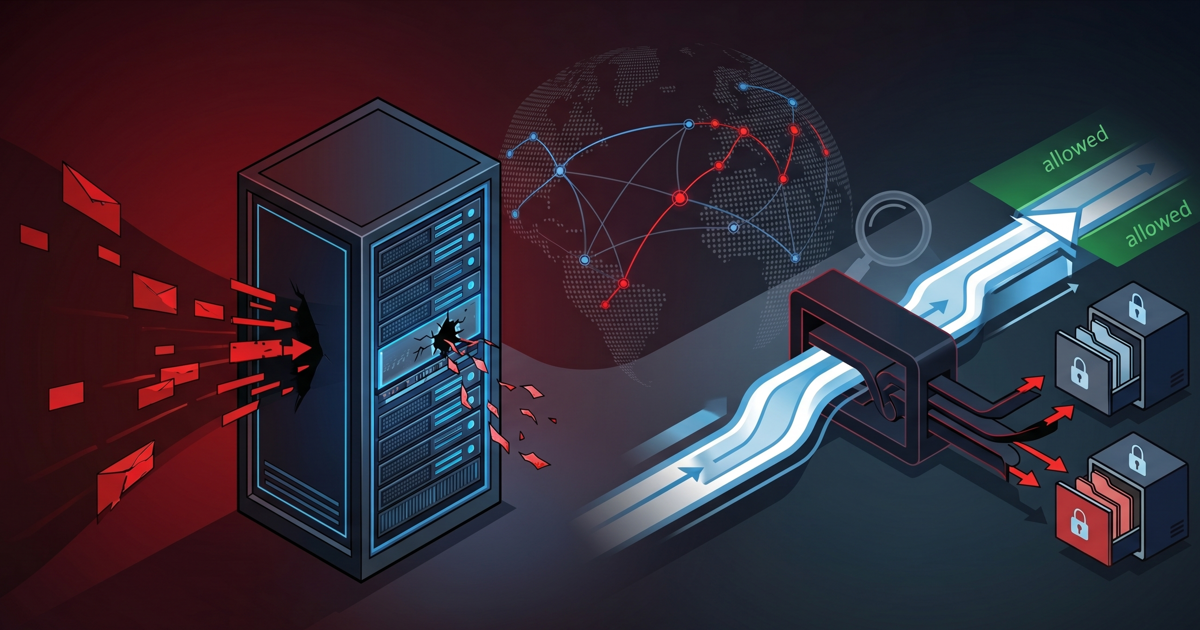
Major players like Microsoft Azure and Cloudflare do not fight these battles from a single data center; they use a massive, globally distributed infrastructure to absorb and filter the attacks. The entire goal is something called distributed scrubbing: detecting and filtering the malicious packets close to their source—meaning the traffic gets neutralized near the compromised routers before it even reaches the targeted data center.
Azure’s DDoS protection, for example, is constantly running, automatically detecting and filtering millions of malicious packets in real-time. This requires an absolute masterpiece of engineering—a global defense shield that must be faster and more intelligent than the botnets attacking it. Frankly, we consider this the exciting part of being a technical expert today—we build the systems that save the internet!
Action Required: Secure Your Corner of the Internet
The biggest takeaway here, and the most critical security concern, is that the scale of these attacks is directly proportional to two things: faster internet bandwidth for the compromised devices and the sheer number of poorly secured IoT devices in the world.
Think about it: every new smart gadget you connect with a default password is a potential soldier for the next record-breaking botnet.
As a Fractional CTO, I tell all my clients: security is a distributed problem, and the integrity of your network relies on every device. If you are building software, you must build security into the core, not just bolt it on later.
Is your organization’s security keeping pace with the new scale of botnet threats like AISURU? We help companies secure their organization and their development lifecycle from the ground up.
Contact StartupHakkSecurity.com today to secure your infrastructure.